What is a Ceramic Matrix Composite?
What is a CMC?
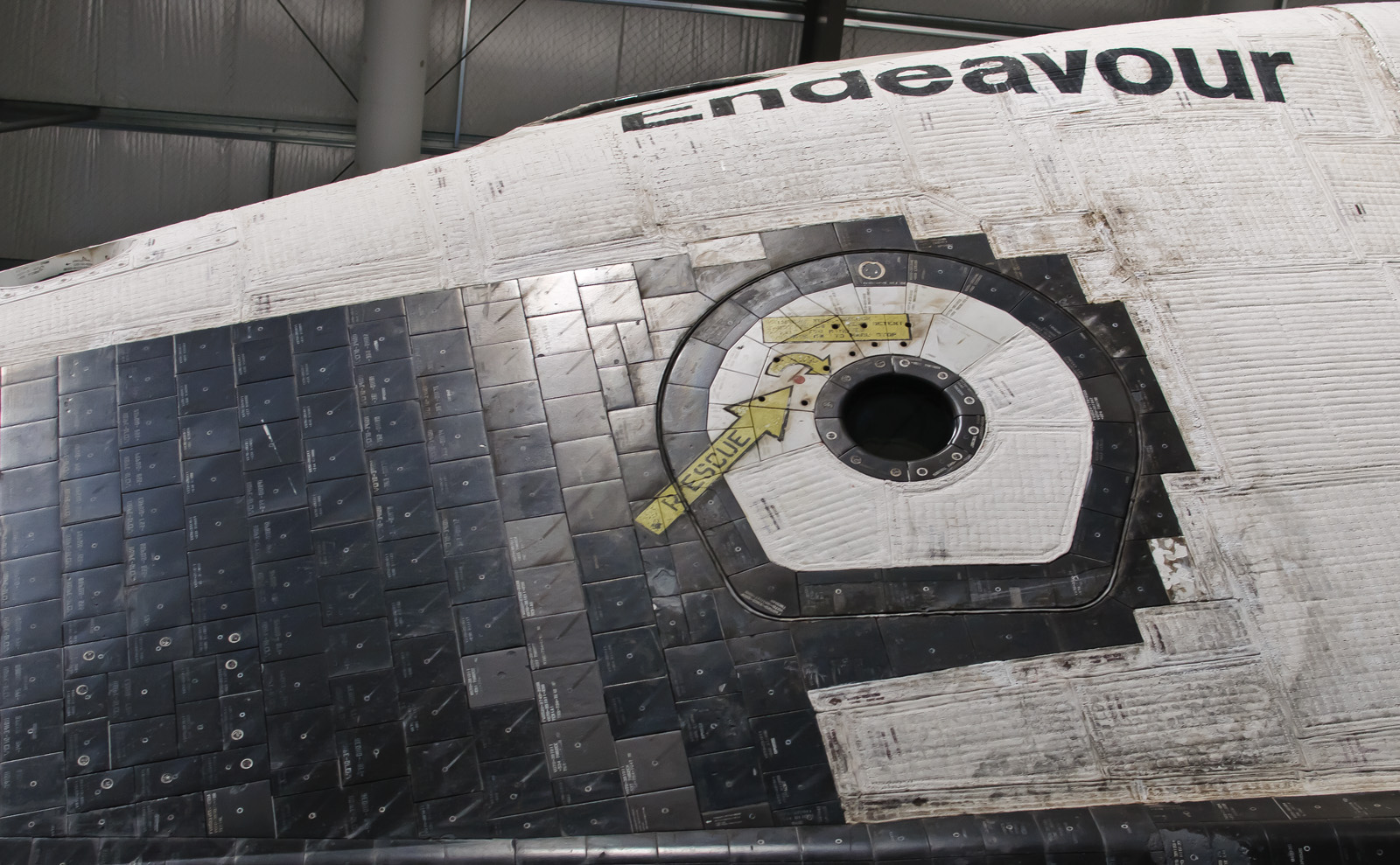
Every time the Space Shuttle came home, the hottest parts of the vehicle like the nose cap and the leading edges of the wings (where re-entry heated the air to over 1,600 degrees) were protected not by metal, and not by ordinary ceramic, but by something in between: reinforced carbon-carbon, a ceramic-like material woven through with carbon fibres. It was the first ceramic matrix composite that ordinary people ever trusted their lives to, decades before most engineers had heard the term. And the fact that NASA would fly it, again and again, on the most inspected vehicle in history, tells you what this article is really about. Because the remarkable thing about a CMC is not that it is strong. It is that it is trustworthy which is the harder trick by far for ceramics.
The teacup problem
Here is the strange thing about ceramics: they are among the strongest, hardest, most heat-proof materials we possess, and we trust them less than almost anything else. Nobody worries that a steel bracket will shatter if you drop it, but everybody knows what happens to a teacup. The reason is the flaw argument from my last post: in a brittle material, one scratch in the wrong place is a lever for concentrating stress, and a ceramic gives that lever everything it asks for. One flaw, one crack, and the crack runs through the whole part at the speed of sound. No yielding, no bending and no warning. The strength of any individual ceramic part is a lottery ticket drawn from its worst invisible defect.
Engineers can design around weakness. They cannot design around surprise.
A brittle thing inside a brittle thing
A ceramic matrix composite sounds, at first hearing, like a bad idea: take brittle ceramic fibres and put them in a brittle ceramic case. Glass reinforced with glass. What could that possibly buy you? Two brittle materials should make one brittle material. And they would; if you bonded them well. The genius of the CMC is that you deliberately don't.
The engineered betrayal
The fibre-matrix interface in a CMC is designed, quite intentionally, to be the weakest thing in the material. When a crack sets off through the matrix at full sprint and reaches a fibre, it finds it cannot afford to break it; the cheaper path is to turn sideways and run along the feeble boundary instead. The crack is deflected, split, and made to pay for every millimetre; fibres left bridging the gap behind it, fibres pulling out of their sockets like rusty nails from old timber, each one taking the crack's energy away. That weak boundary is, in fact, a carefully engineered layer in its own right that materials scientists call it the interphase, and how you build it turns out to divide the entire CMC family into two tribes, which is a story deserving of its own article. What began as one catastrophic sprint becomes a thousand exhausting detours. The result is a ceramic that breaks like wood instead of china. Snap a dry stick and it splinters, hangs together, creaks, and complains; it does not vanish into fragments. A CMC fails the same way: gradually, noisily, and predictably.
Failure on a schedule
It is predictability that is the property that changes everything. Gradual damage is damage you can measure. A CMC under load accumulates fine matrix cracks long before anything lets go; the damage grows in an orderly, modellable way, and an inspector can find it while the part still has plenty of life left in it. Think of car tyres. We do not demand tyres that never wear out; we would not believe anyone who sold us one. What makes tyres trustworthy is that they wear predictably — so we can glance at the tread, know roughly how much is left, and replace them on schedule. That is precisely the discipline (engineers call it lifing) that underpins every metal part in a jet engine: known damage rates, inspection intervals, retirement lives. Monolithic ceramics could never join that system, because a material that fails without warning cannot be given a schedule. CMCs can. A CMC is not a stronger ceramic; it is the first ceramic that fails predictably enough to be engineered rather than merely gambled on. That is what earns a CMC its place in the hottest part of the engine. The fibres, the matrices, the tapes- everything in this series so far- are just the ingredients needed to make it happen.