Britain's High-Temperature Materials Gap
Britain's High-Temperature Materials Gap
We have opened this gap before. The question is whether we close it this time.
In January this year, a room was assembled in London that, to my knowledge, had never been assembled before. Britain's ceramic and metal matrix composites community sat down together: the engine makers and the airframers, the research institutes and the universities, the small companies and the civil servants. They came at the invitation of the Department for Science, Innovation and Technology and Cambridge's Institute for Manufacturing, and they spent a day trying to answer a deceptively simple question: what would it take for this country to lead in high-temperature composites?
The report that followed in the spring is worth reading, not least because of how candid it is. Its headline conclusion is optimistic: that the UK has a genuine chance to lead European supply chains in these materials within five to ten years, that many of the necessary capabilities already exist here, and that in several we are already the best. Its second conclusion is the one I want to dwell on, because the report states it with equal clarity: the things standing in the way are not scientific. They are industrial. Demand signals. Capital. Scale-up capacity. Pilot facilities. Skills. And, in a phrase that should be pinned to the wall of every relevant ministry, persistent gaps in the country's own production of precursors and fibres.
Read those two conclusions together and you have the shape of the gap. Britain knows how. Britain cannot yet make, at rate, at home.
Not one gap but three
People speak of a materials gap as though it were a single thing, to be closed by a single remedy, usually money. It is not. It is three quite different gaps, and they want quite different remedies. Confusing them is how a country can spend a great deal of money, in good faith, closing the wrong one.
The first is a gap of knowledge, and it is the one we do not have. The materials that survive the hottest places in an engine or a re-entry vehicle are understood; the papers are written and the doctorates awarded. Britain is good at this kind of work, the report says so generously, and it is also, not by coincidence, the kind of gap that the machinery of the state is best equipped to recognise and to fund.
The second is a gap of capacity. It sits downstream of the science, in the unglamorous territory between a laboratory result and a component a supplier can quote for: fibre and precursor production, furnaces at industrial scale, the pilot lines where a process is tuned from art into repeatability, the design allowables and test standards that let a certifying authority say yes, and the people, technicians as much as researchers, who carry the knowledge that never makes it into a paper.
The third is a gap of demand: the absence of any reason for a company to build those things. Nobody builds a fibre plant without customers, and nobody designs in a material without a fibre plant. The second and third gaps are locked together, each waiting on the other, and no amount of spending on the first will unlock them. The report's authors saw the circle clearly. So, unfortunately, did their predecessors half a century ago.
Farnborough, 1963
Because we have been here before, and with a material that was, in every sense that matters, ours.
In the early 1960s, three engineers at the Royal Aircraft Establishment at Farnborough, William Watt, Leslie Phillips and William Johnson, took a synthetic textile fibre and, by cooking it under carefully controlled tension so that its carbon chains lined up along the filament, produced something no one had produced before: a carbon fibre with the strength and stiffness to make structures out of. Others had carbonised fibres before; Edison had done it for light-bulb filaments. But the Farnborough trick of stretching the fibre as it was transformed was the step that turned a laboratory curiosity into a structural material. The patent was filed in 1964, and the know-how was licensed to British firms.
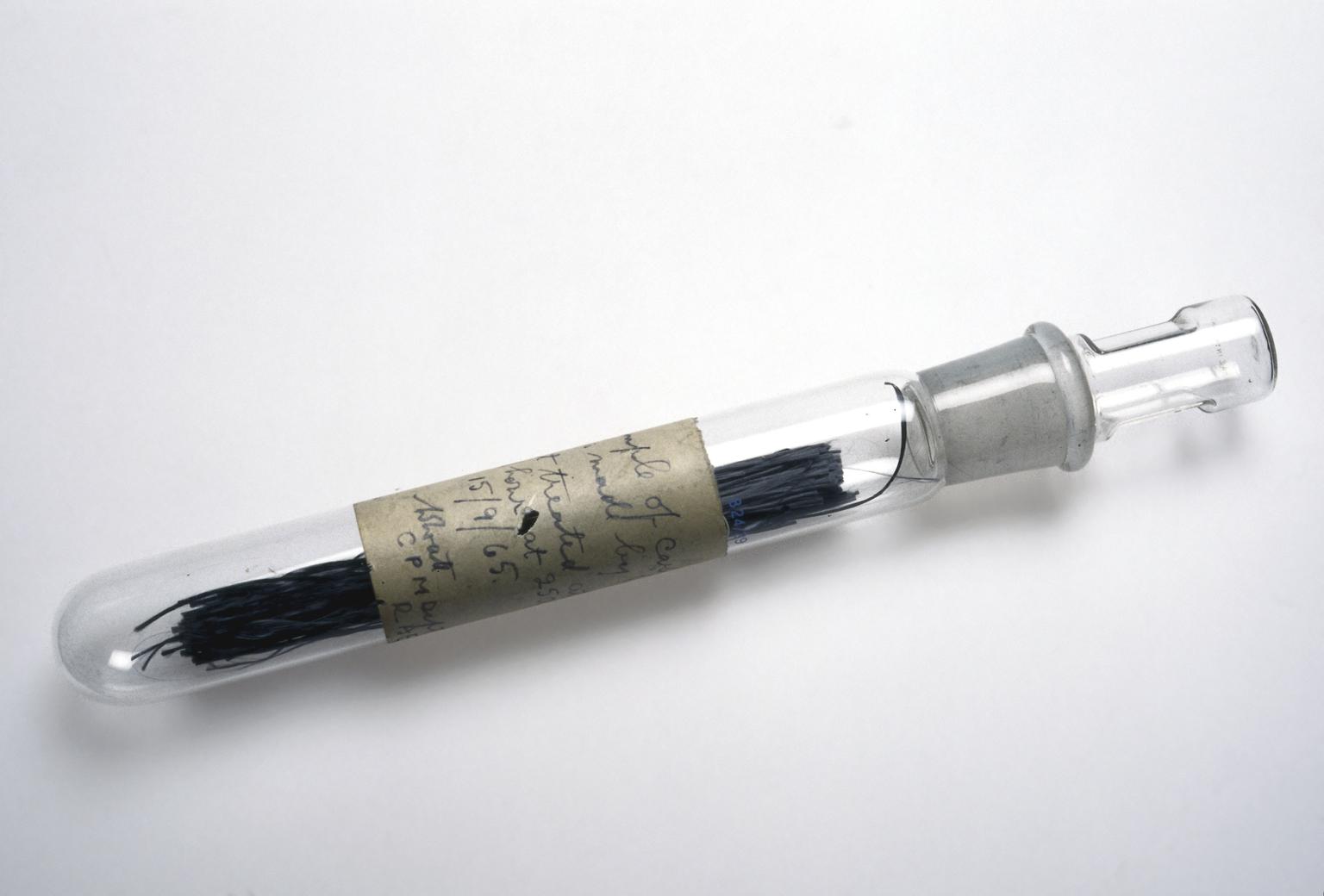
The Science Museum keeps a small relic of what happened next: a stoppered glass tube, of the kind found in every chemistry lab of the period, holding a wisp of black fibre. Its label, in Watt's own hand, records that this was the first sample of carbon fibre made by Courtaulds, the great British textile company, spinning its own acrylic precursor, and that it had been heat-treated at the RAE for one hour at 2,500 degrees on the 15th of September 1965. Read that label carefully, because it is the whole story of technology transfer in a single sentence. Industry could now make the fibre. But the final, transforming step, the hour at furnace-white heat that turned a strong fibre into a stiff one, still had to be done back at the government laboratory, where the furnace and the knack both lived. It is the physical moment of handover, caught mid-handshake.
For a brief, exhilarating moment, then, the most advanced structural material on Earth was a British invention made from British precursor by British licensees, and the future looked obvious.
Rolls-Royce believed it hardest of all. For the RB211, the great new engine for Lockheed's TriStar and the programme on which the company had staked its future, it designed fan blades in the new material, under the trade name Hyfil. The prize was real: lighter blades meant a lighter disc, a lighter shaft, a lighter engine. But the blades failed the bird-strike tests. Carbon fibre in 1969 was brittle in impact in ways that had not yet been designed around, and rain erosion attacked the leading edges. And there was a third problem, less dramatic than a bird through the fan but, for this essay, the most telling: contemporary accounts record that the blades could not be made consistently. Manufacturing repeatability was as much a failing as impact resistance. A material that had left the government laboratory in a glass tube four years earlier was being asked to become a certified, production-quantity aero-engine part, and the making of it was simply not ready. The blades were abandoned in favour of titanium, at a cost in money and time the programme could not absorb. In February 1971, Rolls-Royce, the crown jewel of British engineering, went into receivership and had to be nationalised to survive.
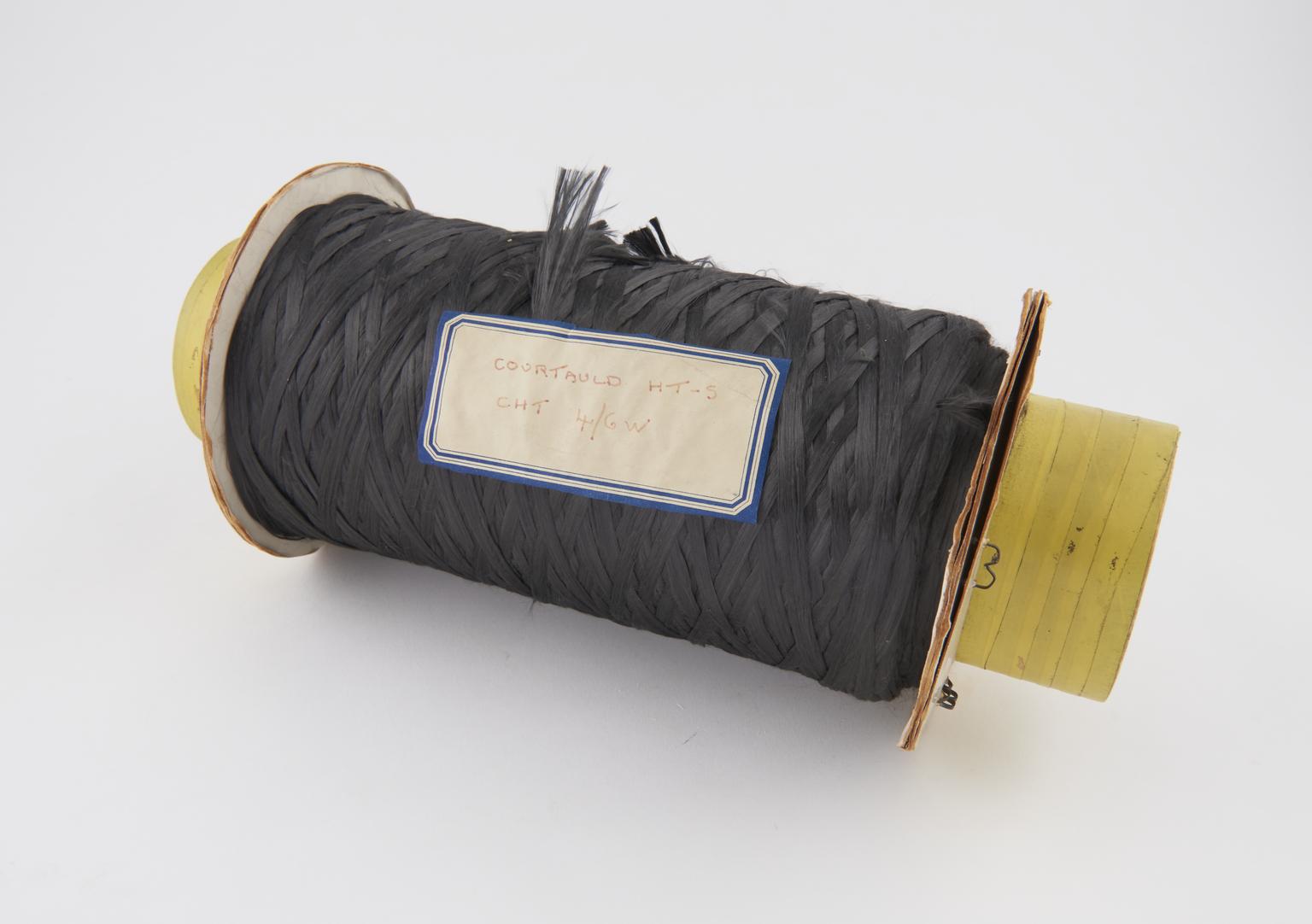
What happened next is the part that matters for this essay, and it happened quietly. The confidence went out of the enterprise. The licensing continued, but now it flowed outward: to the United States, and above all to Japan, where a state-backed textile industry that had been pursuing the same precursor chemistry industrialised the fibre with patience Britain no longer had. By the 1980s the Japanese producers dominated the world market; they still do. The British producers faded or were absorbed. And today, sixty years after Farnborough, the UK's very substantial composites industry runs almost entirely on imported fibre, a dependency the 2026 report records, in the driest possible language, as a persistent gap in domestic precursor and fibre production.
I do not tell this story to disparage the engineers. The Farnborough trio were exactly the kind of people this country should celebrate: a small team in a government lab doing something genuinely new. The failure was not theirs. It was institutional: a loss of nerve, a shortage of patient capital, which is the one ingredient that has never been hard to import, and a country that mistook having invented a thing for being able to keep it. Invention is not capability. We learned that lesson at great expense with carbon fibre, and the report suggests we are at risk of learning it again with the ceramic fibres and composites that will define the next fifty years of propulsion, defence and space.
Why defence and space cannot outsource this
There is a comfortable view that in an open global economy a materials gap does not matter; that if the fibre is made in Japan or the United States, one simply buys it. For consumer goods that is largely true. For high-temperature materials in defence and space it is false, for three plain reasons.
First, export controls. The best ceramic fibres and the most capable composite systems sit under regimes, American ITAR above all, that restrict not only who may buy them but what they may be built into and where the resulting hardware may go. This is no complaint against allies; every nation has the right to control what it invents. But a British programme built on controlled material is a programme whose bill of materials carries a veto held in another capital, and a veto is a veto whoever holds it.
Second, concentration. The report's diagnosis of a narrow overseas supplier base is not a figure of speech: the high-end ceramic fibres at the heart of the best composites are made in a handful of plants worldwide, some of them single facilities. Lead times run to years. A single plant outage, policy change or reallocation to a home-nation programme can stall a British one, with no recourse.
Third, the tacit knowledge. The furnace-door learning that turns a process from art into repeatability lives in people and production lines, not in papers or purchase orders. A country that imports the material imports none of that. When the crisis comes, it has nothing to scale.
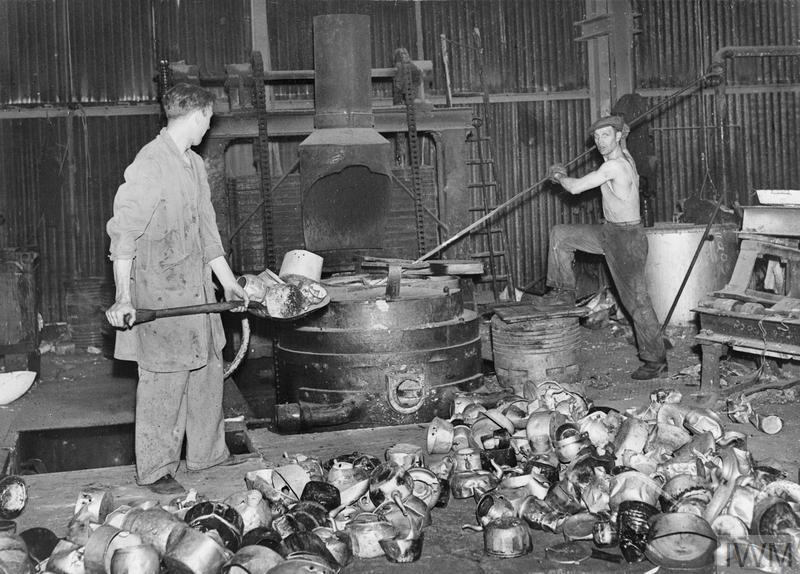
Britain has a folk memory of what a materials gap feels like in a crisis. In the summer of 1940 Lord Beaverbrook, newly in charge of aircraft production, appealed to the nation for its aluminium pots and pans, "Saucepans for Spitfires", and the country answered with mountains of cookware. Metallurgists will tell you the campaign's practical value was small; kitchen alloys are not airframe alloys. But its moral value was immense, and its lesson is exact: when the fibre is the bottleneck, no amount of design brilliance can substitute for the ability to make it.
Space sharpens every one of these points. Launch, re-entry and thermal protection hardware is sovereign almost by definition: the nations that can build it do not sell it, and the nations that cannot build it do not fly. A country with ambitions in orbit that cannot make its own high-temperature structure is, in the end, a customer.
The ladder, and where the volume lives
So far this could read as an argument for pouring money into the highest-performance ceramic composites and building a national champion. That is part of the answer, and the report says so. But I want to make a more specific argument, because I think the gap has an internal structure that matters enormously for how it gets closed.
Picture the temperature ladder. On the top rungs, above twelve hundred degrees, sit the silicon carbide composites, irreplaceable in turbine hot sections and in the irradiated heart of a nuclear reactor; the report reserves them for exactly those duties. Around a thousand degrees, it places the oxide composites for near-term thermal protection. These materials are the summit of the field and the country must be able to make them.
But look at where the volume actually lives. A very large share of the strategically relevant applications operate below about eleven hundred degrees: exhaust structures, nacelles, heat shields, engine surrounds, thermal management for electric vehicles, industrial process equipment. These are the rungs that most of the machine sits on. And they have been chronically underserved, not because the physics is hard but because conventional ceramic composite routes are too slow, too capital-intensive and too expensive to justify at the volumes those applications need. The summit materials cannot descend the ladder economically; the polymer composites cannot climb it thermally. In between lies a structural gap between what we are capable of and what we can deploy in volume, and that gap is where a national industry would earn its living.
Filling the base of the ladder, with an interest declared
I should declare that interest plainly: I am a co-founder of a company making materials for exactly that middle band, so weigh what follows accordingly. But the argument is not proprietary, and I would make it regardless of where I worked.
Inorganic matrix composites, the geopolymer-derived materials this series has been circling, sit natively in that middle band, operating to around eleven hundred degrees. That band is not the territory of one alloy; it is the territory of metal in general. Between two hundred degrees and a thousand, every hot machine is built from titanium, stainless and heat-resisting steels, and the lower nickel alloys: the ducts, shrouds, casings, shields, brackets and fabricated sheet that make up most of the mass of an engine surround or an exhaust system, and most of its part count. None of it is exotic, all of it is heavy, and almost none of it is there because metal is the best material for the job. It is there because, until now, nothing lighter could take the heat at a price a programme would pay. An IMC offers the thermal performance of a ceramic composite at a fraction of that metal's weight, and it offers it to the whole field at once. And it has three properties that speak directly to the gap the report describes.
They are made with the processes Britain already has. IMCs cure like a polymer, which means they run on the polymer-composite supply base that this country built over the past forty years and in which it is genuinely world-class: the presses, the autoclaves, the tape lines, the skills. The gap in ceramic furnaces and pilot lines does not apply to them; the capital is already sunk, in other people's factories.
They are not hostage to controlled fibre. An IMC matrix is compatible with carbon, glass, basalt and alumina fibres, materials that are either available domestically or sourced through diversified, non-ITAR supply chains. No other capital holds a veto over the bill of materials.
And the value stays here. Matrix formulation and component fabrication, the parts of the chain where the knowledge and margin actually live, can be anchored in the UK. That is precisely the stage of the carbon fibre story where we let go.
None of this is a British peculiarity. Every allied nation has the same gap; the Americans are spending billions closing theirs; the middle of the temperature ladder is empty in Washington and Canberra for exactly the reasons it is empty in London. A material that runs on uncontrolled fibre and on the polymer industry's own processes is not, in the end, a British product but an allied one. It can be made wherever there is a tape line and a customer. Britain's opportunity is to be the place it is made first, the beachhead rather than the boundary, and the AUKUS partnership, which names hypersonic flight among the technologies its members intend to develop together, is a door already half open.
The important point is what this does to the summit. A volume base does not compete with the high-end ceramic composites; it pays for them. Every furnace, test house, standards body, and trained technician sustained by a middle-band industry is available to the summit programmes too. The report worries, rightly, about fragmented demand: a niche here, a niche there, none of them large enough alone to justify a fibre plant or a pilot line. A layered materials ecosystem, with a broad cost-effective base under a narrow high-performance peak, is how you aggregate that demand into something a factory can plan around.
What the country would have to do
The report's prescriptions are the right ones and I will not rehearse them at length: sustained demand signals from engine makers and from government procurement, structured pull-through programmes with clear component requirements, funded demonstrators, capital for pilot facilities, early investment in design allowables and standardised test methods so that certifying bodies can say yes, and a skills pipeline that runs from the research bench to the shop floor.
I would add one reframing. The temptation in any strategic materials programme is to fund the pinnacle: the highest temperature, the most extreme duty, the material that wins the conference. Fund it. But understand that the pinnacle has never, anywhere, paid for itself; it is carried by the volume beneath it. The countries that kept their carbon fibre industries were not the ones with the best laboratory fibre in 1965. They were the ones that built the boring, patient, mid-market volume that let the plants keep running while the aerospace grades matured. If Britain wants to hold the summit of the ladder this time, it must fund the rungs. And whoever builds those rungs, in whichever country, will find that they own the ladder.
The metal that was dearer than gold
Let me end with the opposite story to Farnborough, the one where the material got out of the laboratory and into the world.
In the 1850s, aluminium was a wonder material and a curiosity. It was strong, light, would not rust, and it was so difficult to extract from the ground that it cost more than gold. Napoleon III is said to have reserved his aluminium cutlery for his most honoured guests, the lesser dignitaries making do with gold; when the Americans finished the Washington Monument in 1884 they capped it with a small aluminium pyramid; nothing was more precious. It was, in every sense, a summit material: magnificent, and rare.
Then, in 1886, two young men working independently on opposite sides of the Atlantic, Charles Martin Hall in Ohio and Paul Héroult in France, both twenty-two years old, found an electrolytic route to extracting the metal. Within a decade its price had collapsed by more than ninety per cent. Nobody had invented a better aluminium. Somebody had invented a cheaper way to make it, and the metal of banquets became the metal of aeroplanes. Every airframe of the twentieth century descends from that one change in process.
That is the whole lesson of this essay, and of this country's own history with advanced materials. The summit materials are necessary and we must be able to make them. But no nation ever kept a materials industry by owning the summit alone. Britain does not need to invent the next carbon fibre. It has already done that once, and watched it leave. What it needs is to build the base of the ladder, the affordable, high-volume rungs, so that this time, when the room in London reconvenes in five or ten years, it is to discuss what we have built, rather than what we once had.